
Online FEMM Classes
3 Sessions. 12 Weeks.
Everything you need to understand your health and fertility!

-
Live Online Instruction from a Certified FEMM Teacher
-
Practice Exercises and Review
-
Custom Chart Review - Get Insight into Your Unique Hormonal Patterns
-
Learn How to Avoid or Achieve Pregnancy - Naturally!
Session 1:
FEMM & Your Health
Learn how hormones influence your health and how to chart your hormonal activity. (90 minutes)
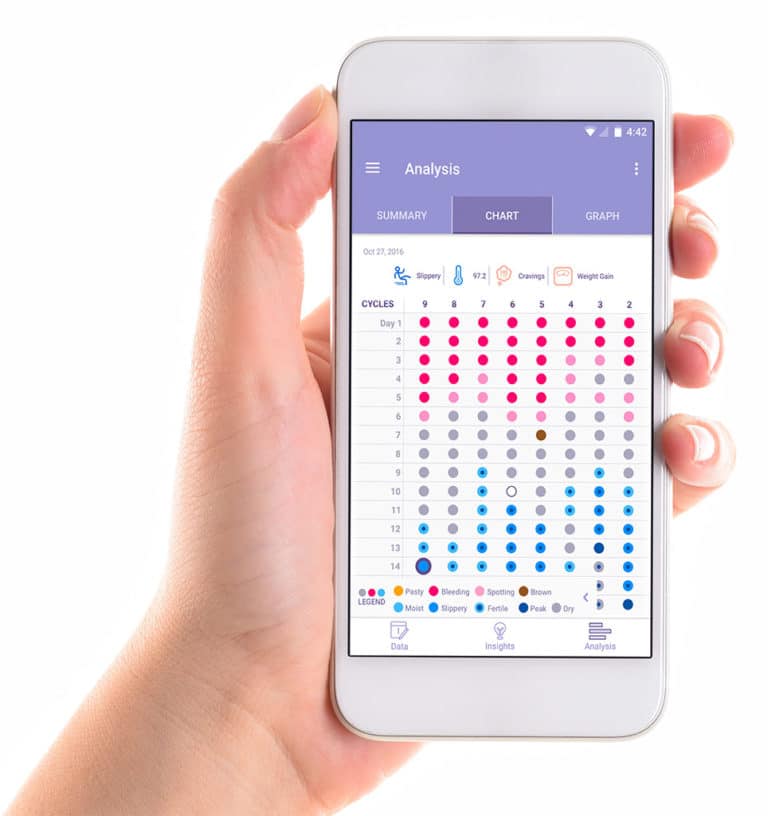
Participants learn the parts and function of reproductive anatomy, and the physiology of ovulation - understanding the critical role of hormones in the cycle. Hormones from the brain and ovaries affect the health of the reproductive organs and the entire body. Observable biomarkers allow women to identify hormonal changes, key cycle events such as ovulation and other indicators of health and fertility. Participants are taught the method of FEMM charting through observing and recording these biomarkers. The session concludes with charting exercises.
Participants learn the parts and function of reproductive anatomy, and the physiology of ovulation - understanding the critical role of hormones in the cycle. Hormones from the brain and ovaries affect the health of the reproductive organs and the entire body. Observable biomarkers allow women to identify hormonal changes, key cycle events such as ovulation and other indicators of health and fertility. Participants are taught the method of FEMM charting through observing and recording these biomarkers. The session concludes with charting exercises.
Session 2:
FEMM Expert
Learn to identify healthy patterns or health problems. (90 minutes)
Participants learn to understand the cycle—both its biomarkers and the underlying hormonal activity—as an indicator of their overall health. They are taught the phases of the cycle with an emphasis on the time of ovulation, the dominant hormonal activity in each phase, and what biomarker observations within each phase are necessary for a woman to be considered healthy. Attention is given to the understanding of the cycle as a holistic fertile process, which is fundamental to understanding cycle variations. The session includes analysis of various cycle types, including those of health concern. Exercises, Q&A, and case studies accompany this session.
Participants learn to understand the cycle—both its biomarkers and the underlying hormonal activity—as an indicator of their overall health. They are taught the phases of the cycle with an emphasis on the time of ovulation, the dominant hormonal activity in each phase, and what biomarker observations within each phase are necessary for a woman to be considered healthy. Attention is given to the understanding of the cycle as a holistic fertile process, which is fundamental to understanding cycle variations. The session includes analysis of various cycle types, including those of health concern. Exercises, Q&A, and case studies accompany this session.
Session 3:
Family Planning
Learn to manage your fertility. (90 minutes)
In this session, participants are taught the principles of FEMM Family Planning. The session includes a review of male and female reproductive physiology, the dominant reproductive hormones, and the key stages in and differences between male and female fertility throughout reproductive life. With regard to family planning, the key event in a woman’s cycle is ovulation, and so participants learn to relate cycle biomarkers to ovulation and a woman’s fertility. Primary biomarkers are estrogenic cervical fluid and the surge of the luteinizing hormone (LH) just prior to ovulation. Participants apply this knowledge to identifying ovulation and fertility in variable cycle types. Exercises, Q&A, and case studies accompany this session.
In this session, participants are taught the principles of FEMM Family Planning. The session includes a review of male and female reproductive physiology, the dominant reproductive hormones, and the key stages in and differences between male and female fertility throughout reproductive life. With regard to family planning, the key event in a woman’s cycle is ovulation, and so participants learn to relate cycle biomarkers to ovulation and a woman’s fertility. Primary biomarkers are estrogenic cervical fluid and the surge of the luteinizing hormone (LH) just prior to ovulation. Participants apply this knowledge to identifying ovulation and fertility in variable cycle types. Exercises, Q&A, and case studies accompany this session.
Upcoming Sessions
What biomarkers are used in the FEMM method?
FEMM teaches women to chart critical biomarkers: cervical fluid, bleeding, LH testing, and physical/emotional symptoms. FEMM is a sympto-hormonal method, meaning both cervical fluid and LH testing are used to determine days of fertility. Basal body temperature (BBT) is an optional third sign that can be noted using the FEMM app.
How is FEMM different than other methods of natural family planning?
FEMM focuses on understanding and supporting your hormonal health, and not just identifying fertile and infertile days. While many fertility awareness methods center primarily on avoiding or achieving pregnancy, FEMM teaches you how to interpret your cycle as a vital sign of overall health. You’ll learn how hormones function throughout the month, what healthy patterns look like, and when something may need medical attention.
What if my cycles aren't regular?
FEMM can be used with regular or irregular cycles. In fact, irregular patterns often provide important information about underlying hormonal health. The method helps you recognize patterns over time and understand what your body may be signaling.
I'd really prefer to take a course live, in-person. Is there an option for me?
Absolutely! Please use our Certified Teacher Directory to find a teacher near you. Teachers are available across the globe, in over 30 countries and almost every US state.
Joy Kubik
I have been a certified FEMM Teacher since 2021. I am also a Natural Family Planning (NFP) Coordinator and Women's Health Advocate and have worked with many teachers from other fertility awareness based methods. I have been working with women regarding chart reviews and referrals for over a decade before I was certified as a teacher. I love helping women learn more about themselves and advocate for informed consent with healthcare decisions. I look forward to hearing from you and working with you!
Olivia Ham
I’ve been involved in FEMM for the last couple of years as a student and now a teacher. After learning from a FEMM provider as a teenager, I discovered a new passion for fertility awareness, and desire to share it with every woman I encounter... I love teaching FEMM because their method is not only very practical and easy to understand, but FEMM also empowers women to know and appreciate the beautiful design of their bodies. I’ve had the privilege of teaching multiple women of all ages and being the first person to help them uncover the secrets of their womanhood. I can’t wait to share this invaluable knowledge through teaching FEMM group classes!
Meet
Our
Instructors
"Learning to chart with FEMM as a single woman in my 20s changed my life. It connected me with the medical care I needed when no one else had been willing to help me with my irregular cycles. Now, years later, I look forward to empowering women with the education that has the power to change their lives as well!"
Christa johnson, femm teacher
"As a FEMM teacher and a woman that has been tracking my cycles for 6+ years, I know first hand that understanding your menstrual cycle and daily biomarkers can change your life. The daily awareness of your fertility status and hormones allows you to make decisions that align with your health, fertility, and fitness goals each day. It is empowering to gain a profound sense of body literacy, as this transforms the way women can participate in their own health care."
Karli taulbee
“FEMM is an opportunity for women to become more conscious and responsible with decisions they make about their body. Nowadays, there are a lot of issues in the area of reproductive health in which we have to make decisions without enough information. FEMM is a response to this challenge.”
Anna Vizer, MD, Endocrinologist, BIK Hospital, Budapest, Hungary